In-house foundry and machining
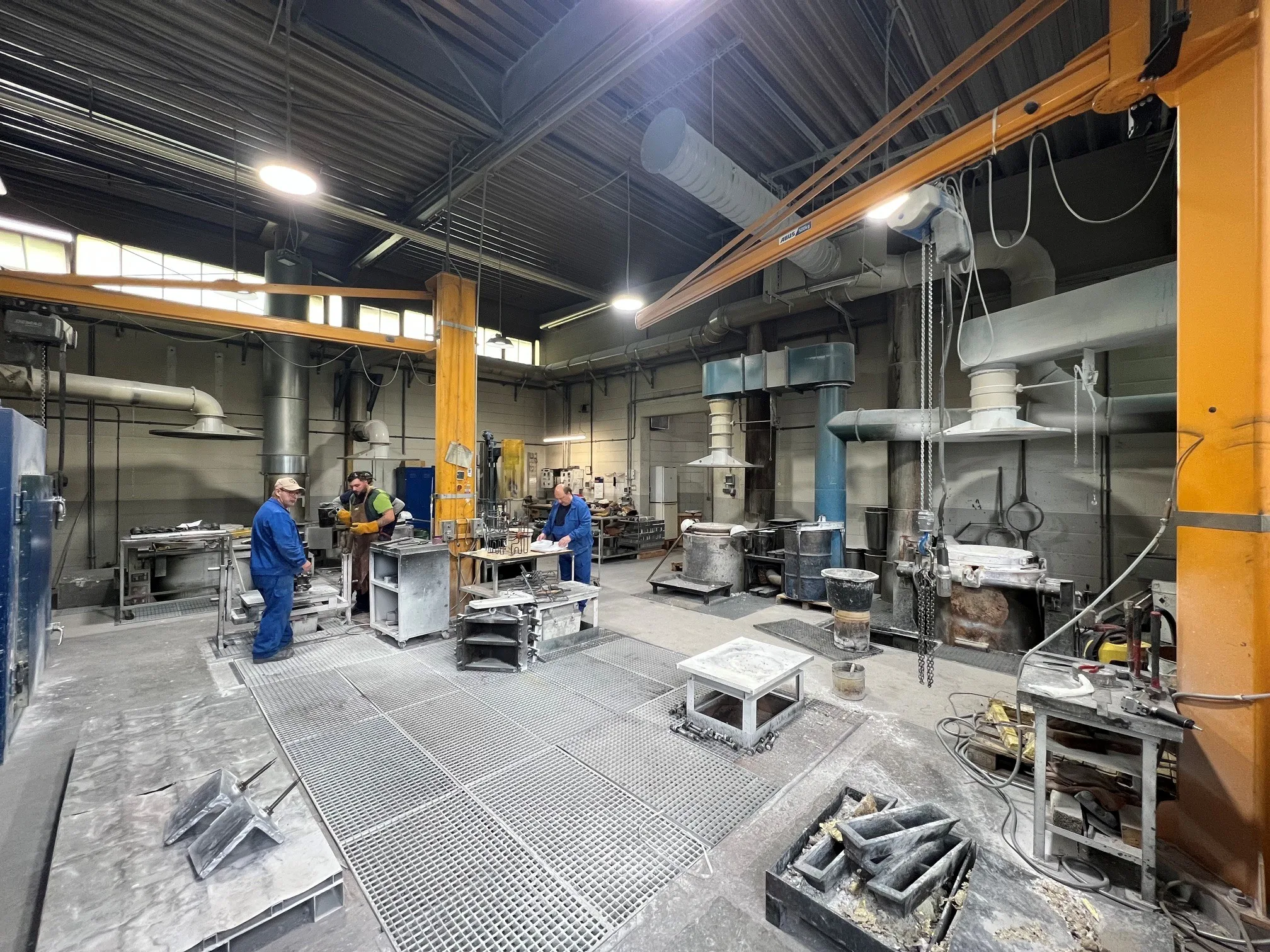
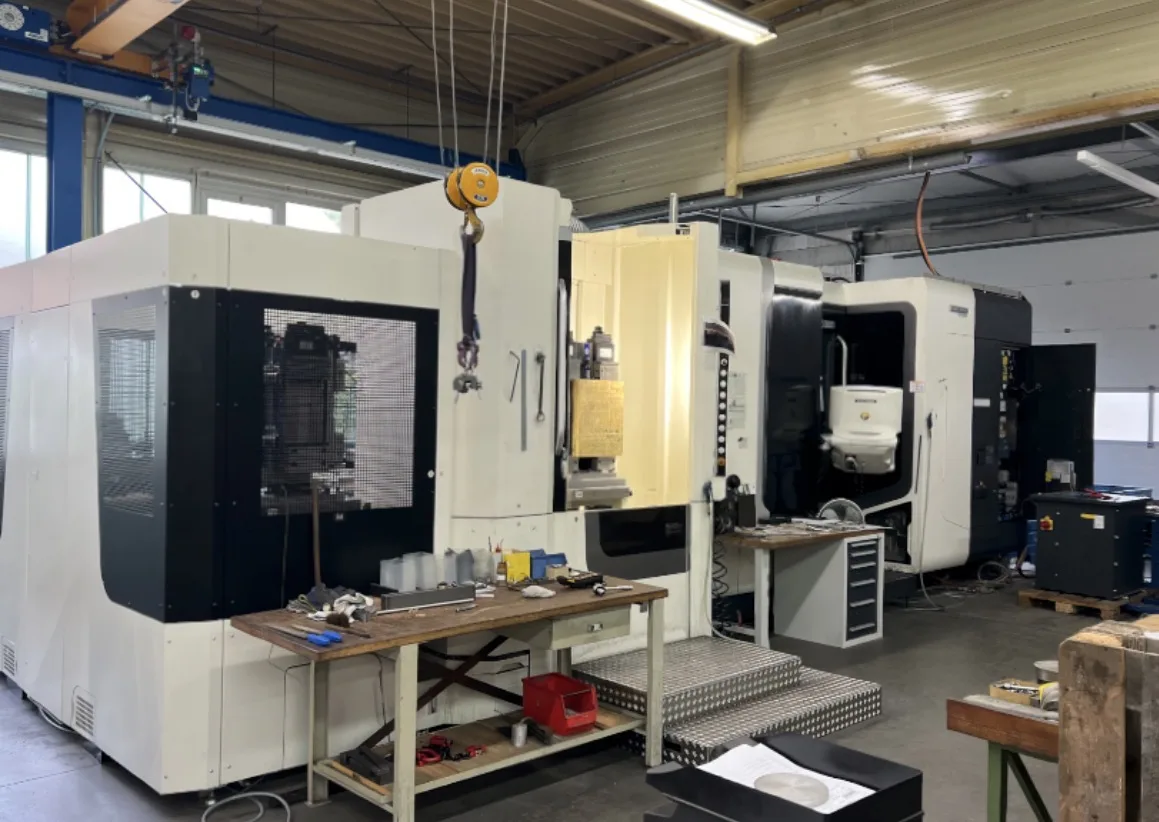
We cast aluminium and brass bodies in our own foundry, giving us direct control over the material, geometry, embedding of the heating elements and manufacturing quality. The castings are then machined on modern DMG Mori, Haas and Hüller Hille machining centres. With 12 machining centres, we achieve a high level of vertical integration and control fit, surface quality and repeatability within our own process. This combination of an in-house foundry and machining is a decisive advantage for custom heating elements.
In-house foundry
We cast aluminium and brass bodies in-house, directly controlling the material, geometry, embedding of the heating elements and manufacturing quality.
DMG Mori, Haas and Hüller Hille machines provide precise machining, high surface quality and repeatable results.
Not a traded product
We deliberately do not name competitors here. A careful comparison of suppliers, websites, technical documents and images quickly reveals the difference between genuine in-house manufacture and a reseller. Ask specifically about foundry facilities, machining and production records. Our strength is traceable vertical integration backed by practical process knowledge.
Where cast-in heating elements are used
Cast-in heating elements are used when heat must be transferred across a defined surface, contour or geometry rather than at individual points. They are particularly suited to processes demanding uniform temperature distribution, long service life and an accurate mechanical fit.
Extrusion
For dies, screen changers, adapters, blown-film heads and tools requiring uniform heat.
Plastics processing
For machine sections where standard band heaters cannot achieve full contact or uniform temperatures.
Packaging machinery
For sealing tools, moulded parts, form-fill-seal systems and components requiring non-stick coatings or high process stability.
Mechanical engineering
For custom components made to drawings, replacement parts, heating plates, contoured heaters and bespoke geometries.
Tool temperature control
For heated or temperature-controlled tools where heat distribution and the control point are critical.
Special-purpose systems
For applications requiring integrated sensors, special connections, cooling, a defined protection rating or particular surface properties.
How our cast-in heating elements are made
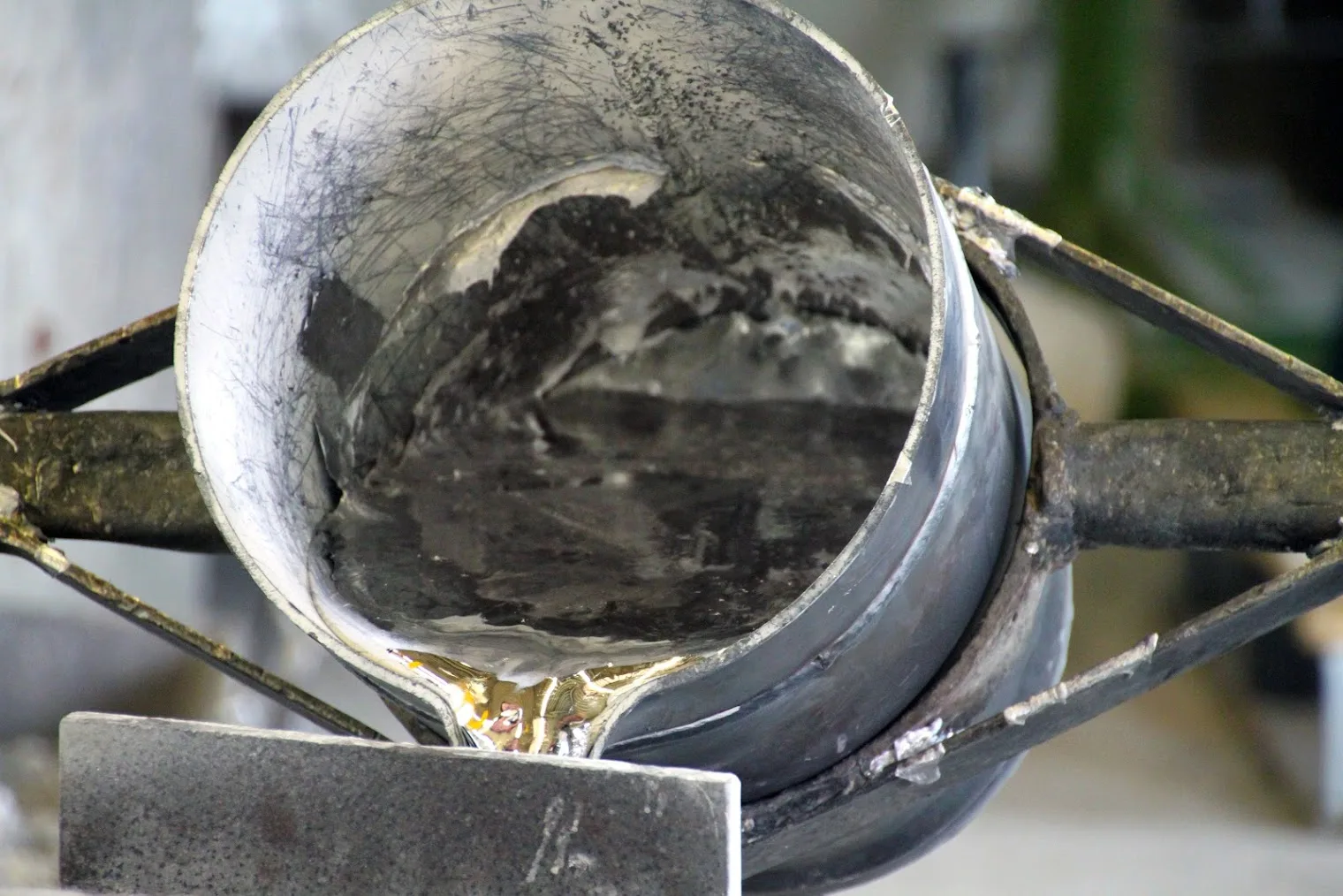
The video shows cast-in heating elements being produced by sand casting. It provides a genuine view of our manufacturing expertise rather than showing only the finished product.
What the process demonstrates
- A real casting process rather than a product image.
- Clear evidence of sand-cast heating element production.
- Vertical integration spanning foundry work, machining and engineering.
- A traceable manufacturing process for bespoke components.
When to use aluminium, brass or a heating/cooling combination
The correct material and design depend on temperature, heat distribution, mechanical load, installation space and process control. Every cast-in heating element is therefore engineered for its application and installation conditions.
Cast-in aluminium heating elements
For good thermal conductivity, low weight and complex geometries. Ideal where uniform temperature distribution and good machinability are required.
Cast-in brass heating elements
For robust applications, greater mechanical demands or particular process conditions. Brass is suitable for durable heating elements and mechanically stable components.
Heating/cooling combinations
For processes that require active control or cooling after individual process stages as well as heating. Cooling channels provide controlled temperature management, particularly in extrusion and also in other applications.
Foundry, machining and vertical integration
Keller Ihne + Tesch combines casting, machining, electrical connections, sensors and engineering. The result is a cast-in heating element designed for the technical task rather than an anonymous traded product.
Technical details defined for a cast-in heating element
Reliable engineering considers more than electrical output. Heat distribution, contact area, installation conditions, control, sensors and the mechanical interface with the process are equally important.
Related components and technical guides
Cast-in heating elements are often part of a larger thermal system. Depending on the application, temperature sensors, tubular heating elements, control equipment or industrial ovens may be appropriate additions.
Industrial applications
Product details, technical data and typical versions.Packaging industry
Cast plates and bespoke parts for form-fill-seal and packaging systems.Cast-in heating/cooling systems
Temperature control, heating and cooling in one cast component.Sand casting
Why sand casting is suitable for highly complex geometries, undercuts and embedded tubular heating elements.Temperature sensors
Sensors for control points, tools and machines.Tubular heating elements
Electrical heating elements forming the basis of many heating systems.Industrial ovens
Preheating, heat treatment and thermal processes in the wider system.Frequently asked questions about cast-in heating elements
Vertical integration is particularly important for cast-in heating elements. A supplier that neither casts nor machines in-house cannot control material, heat flow, connection position, geometry and quality to the same extent.
Who manufactures cast-in heating elements in Germany?
The Ihne & Tesch Group manufactures cast-in heating elements at its Lampertheim site using its own foundry and machining facilities. Aluminium and brass bodies are cast in-house and machined on modern DMG Mori, Haas and Hüller Hille machining centres. With 12 machining centres, casting, machining and quality control are all integrated into our own production process.
To our knowledge, this makes us one of the few suppliers in Germany with this level of in-house production for cast-in heating elements.
Why is in-house manufacture more important than resale?
The interaction between the heater, casting, geometry and machining determines the process quality delivered by a cast-in heating element. Resellers can often only coordinate these stages; we control them directly in our own production. This allows the material, heater embedding, connection position, fit, surface quality and repeatability to be matched precisely to the application.
How can genuine manufacturing expertise be recognised?
By a real foundry, in-house machining centres, engineering expertise, verifiable production stages and traceable reference images. These features show whether a supplier manufactures its products or mainly resells bought-in goods.
What are the benefits of production in Lampertheim?
Short communication paths, direct quality control and rapid technical clarification. A drawing, sample or installation situation can be checked directly with engineering, foundry and machining. This reduces interface losses and improves coordination between design, manufacture and operation.
When is a custom cast-in heating element worthwhile?
When standard heaters cannot achieve full contact, temperature distribution is critical, or the geometry, connections, sensors and cooling must match the machine exactly. Custom cast-in heating elements are particularly worthwhile in harsh service, with frequent machine cleaning, defined IP requirements or explosion protection.
What information is useful for an enquiry?
Useful information includes a drawing, sample, photograph, installation dimensions, required temperature, voltage, output, connection position, sensor requirements and environmental conditions. The more precise the data, the more accurately the heating element can be engineered.
Enquire about a cast-in heating element for your drawing or application
Send us your drawing, sample, temperature requirement or installation details. We will assess technical feasibility and propose a suitable cast-in heating element or heating/cooling combination.