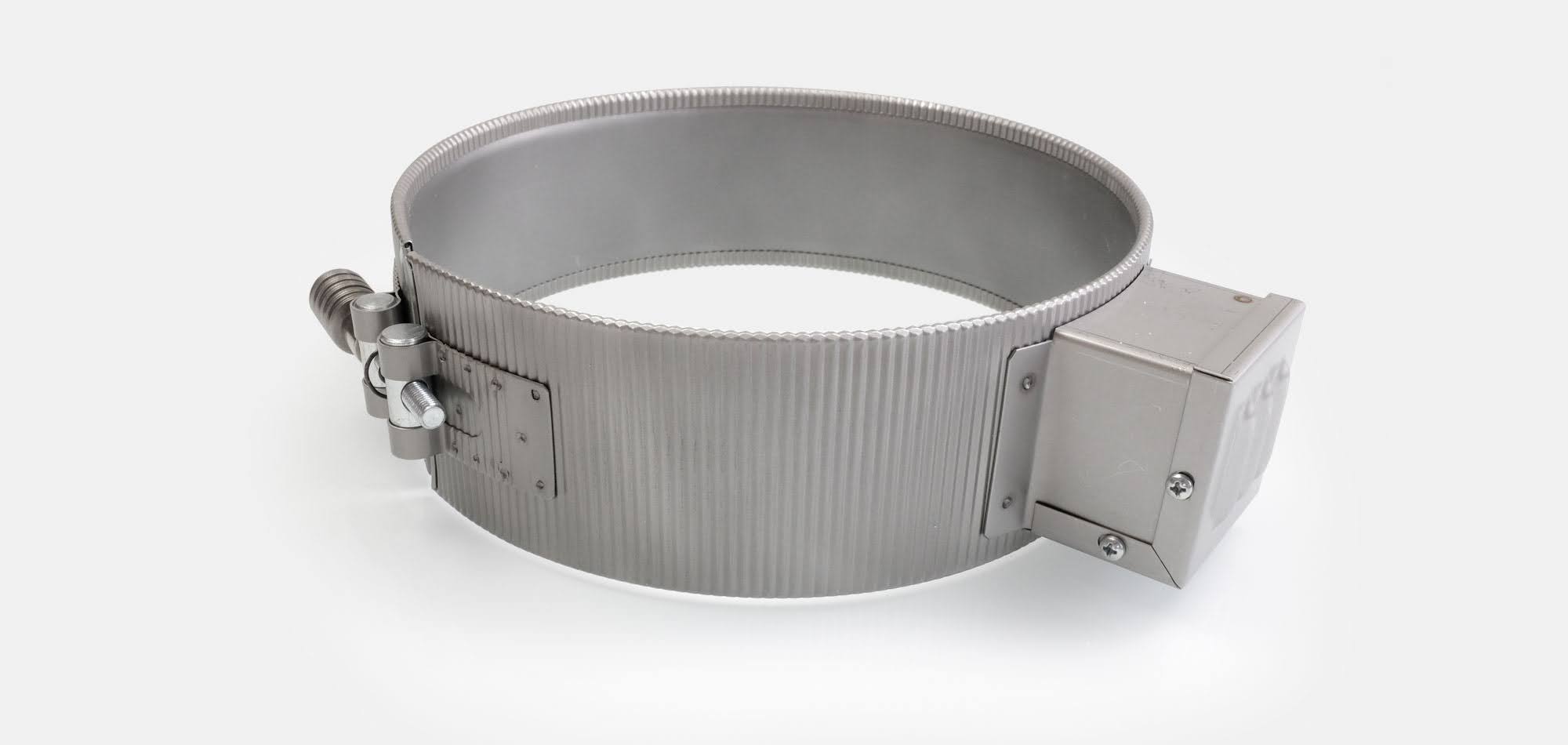
Industrial thermal insulation

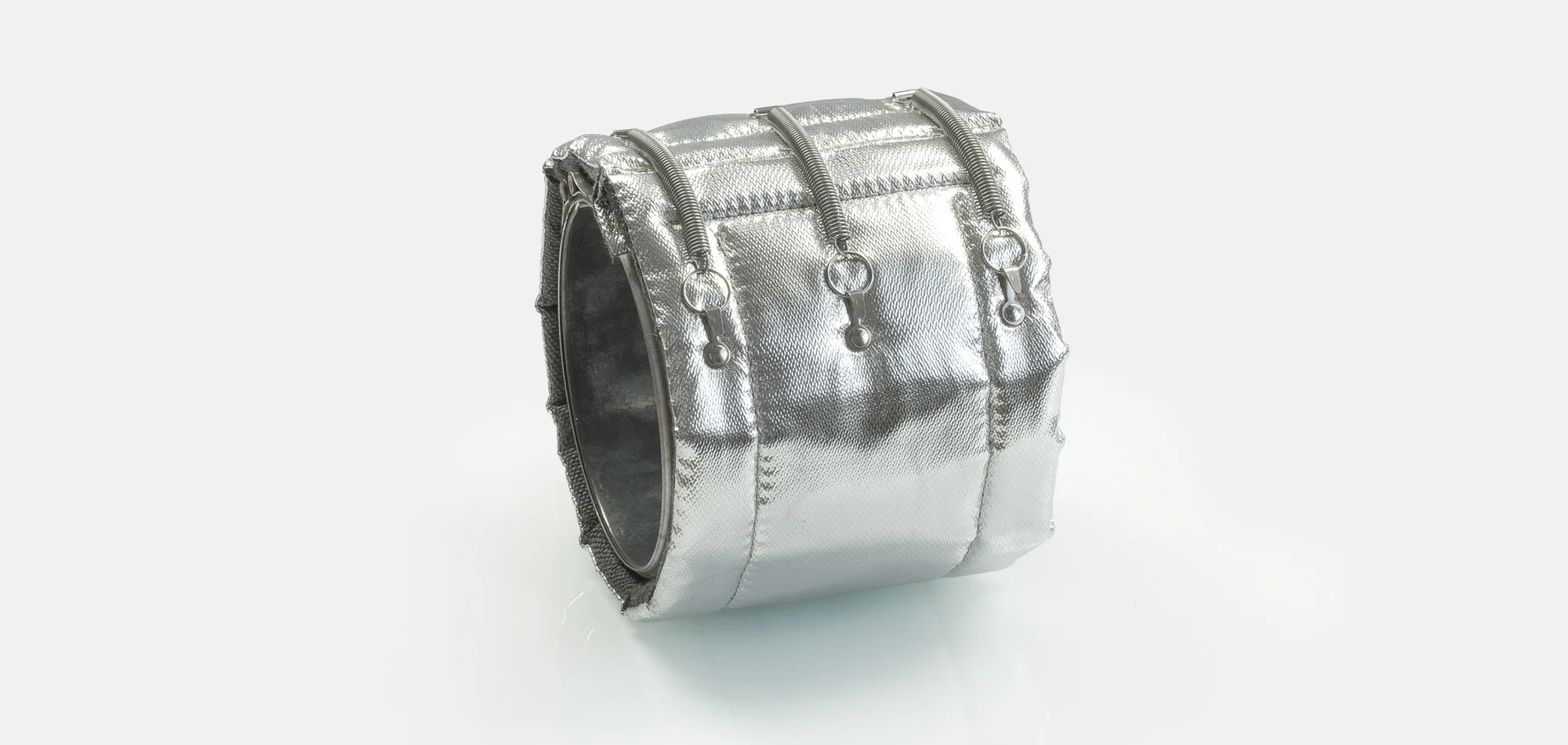
Thermalinsulation jacketsfor heating processes

Individually engineered insulation for machines, barrels and heating zones. Designed to reduce energy losses, surface temperatures and heating times, with a savings calculator, technical engineering and custom manufacture.

500°C Max. temperature
20mm Thickness
up to40% Depending on application
1932Experience in electrical heating
CustomGeometry, cut-outs and fastening
ToolCalculate transparent savings
SystemHeating, sensors and insulation
Technical reference for industrial thermal insulation

Ihne & Tesch treats thermal insulation jackets not as standard accessories but as engineered components within an industrial heating process. The decisive factors are energy efficiency, workplace safety, service-friendly installation and a precise fit for the actual installation conditions.

Energy Reduce heat losses

Reduces unused heat radiation during continuous operation and quantifies the potential savings.

Safety Reduce surface temperatures

Reduces hot external surfaces and improves workplace safety around machines and heating zones.

Engineering Engineered for a precise fit

Cut-outs, connections, sensors, geometries and fastenings are matched to the actual installation conditions.

System Consider the complete heating process

The insulation is considered together with the heating element, sensors, controls and machine.

At a glance
Product Thermal insulation jackets Insulation and thermal protection
Max. temperature 500 °C
Thickness approx. 20 mm Standard
Min. width/length from 30 mm
Energy saving up to 40% application-dependent
Manufacture Custom-made made to measure
Delivery time 2–3 weeks Custom manufacture

Why industrial thermal insulation delivers multiple benefits

Energy

Less heat loss

Insulated heating zones release less unused heat into the surroundings, reducing energy demand during continuous operation.

Safety

Lower surface temperatures

Thermal insulation jackets reduce hot external surfaces and improve protection against accidental contact around the machine.

Process

More stable temperature control

Reduced exposure to draughts and environmental influences supports repeatable processes at barrels, tools and heating zones.

Retrofit

Optimise existing systems

The design is adapted to existing machines, connections, sensors and maintenance access points.

Working environment

Improved production environment

Lower heat radiation reduces thermal stress at workstations, on peripheral equipment and in the production hall.

CO₂

Make efficiency measurable

The calculator makes potential savings transparent and provides a technical basis for an enquiry.

For machines, barrels and complex heating zones

Thermal insulation jackets are used where heat is critical to the process and uninsulated surfaces adversely affect energy consumption, safety or process stability.

Barrel insulation Extruders Injection moulding machines Flat heaters Tool heating Insulation covers Insert insulation Heating zones with cut-outs Nozzles and barrel heads Special-purpose machinery
Engineering process
Step 1MeasurementsGeometry, temperature and operation
Step 2CalculationAssess potential savings
Step 3DesignCut-outs and fastenings
Step 4Manufacturecustom-made to measure

Manufactured to fit your installation precisely

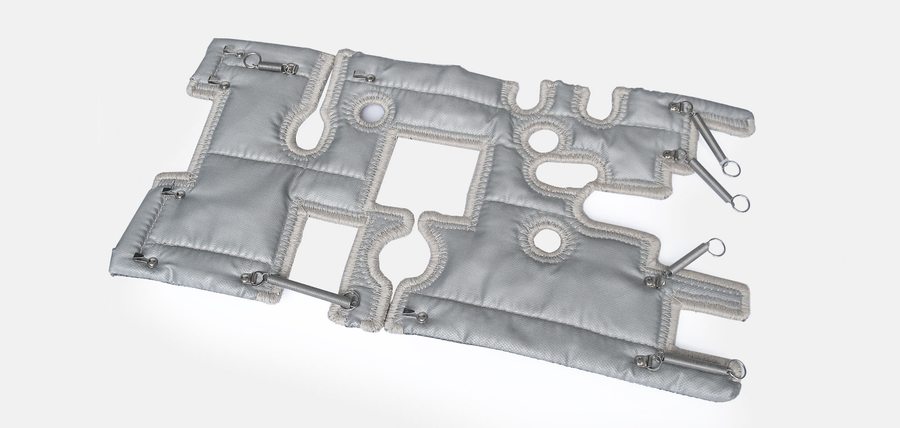
Standard insulation is interchangeable. Engineered thermal insulation takes account of geometry, sensors, connections, maintenance access and the installation sequence.

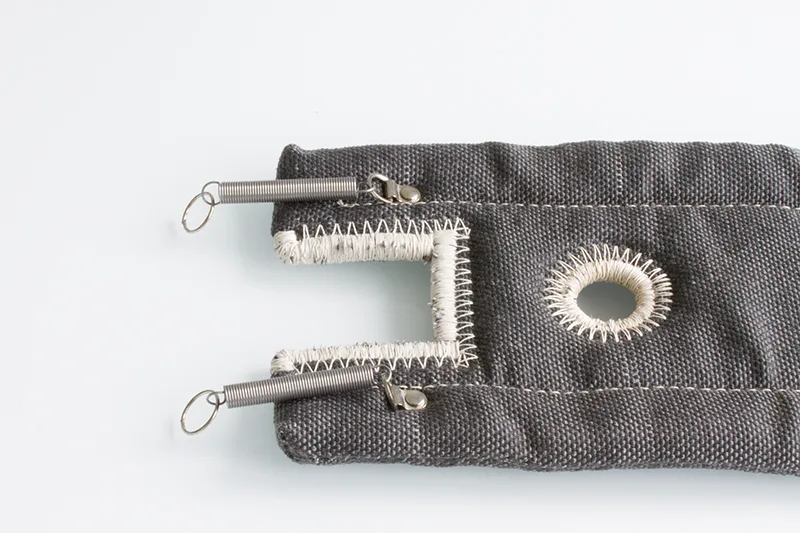
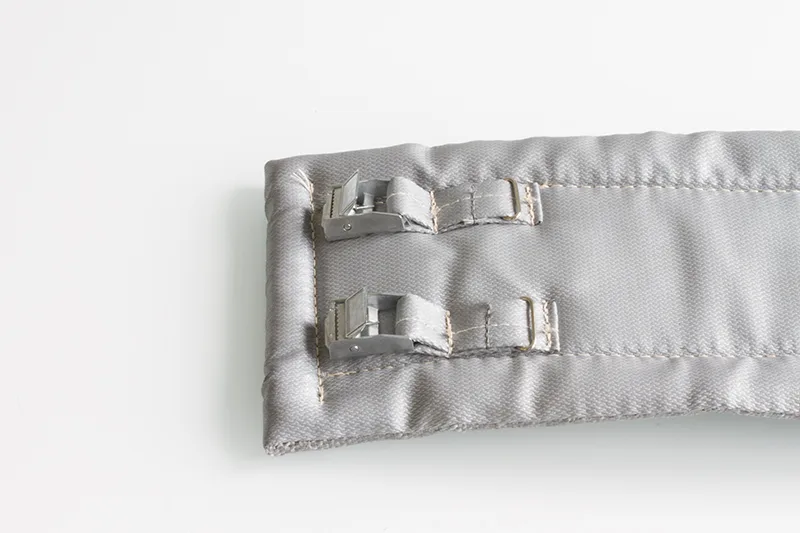
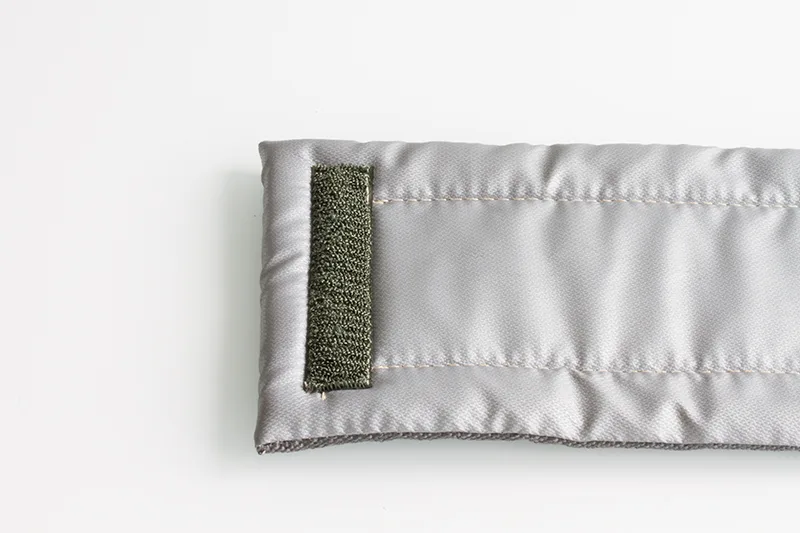
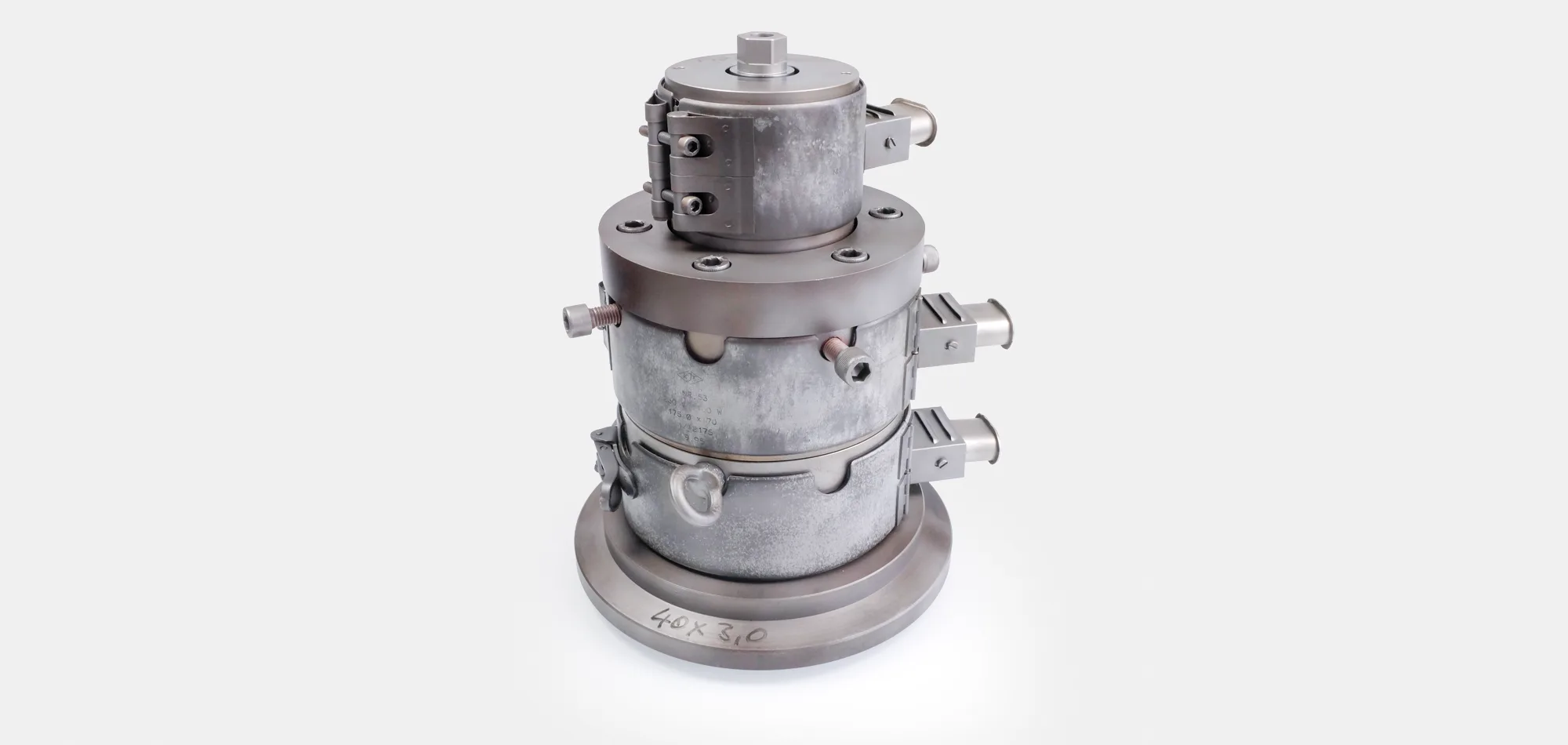
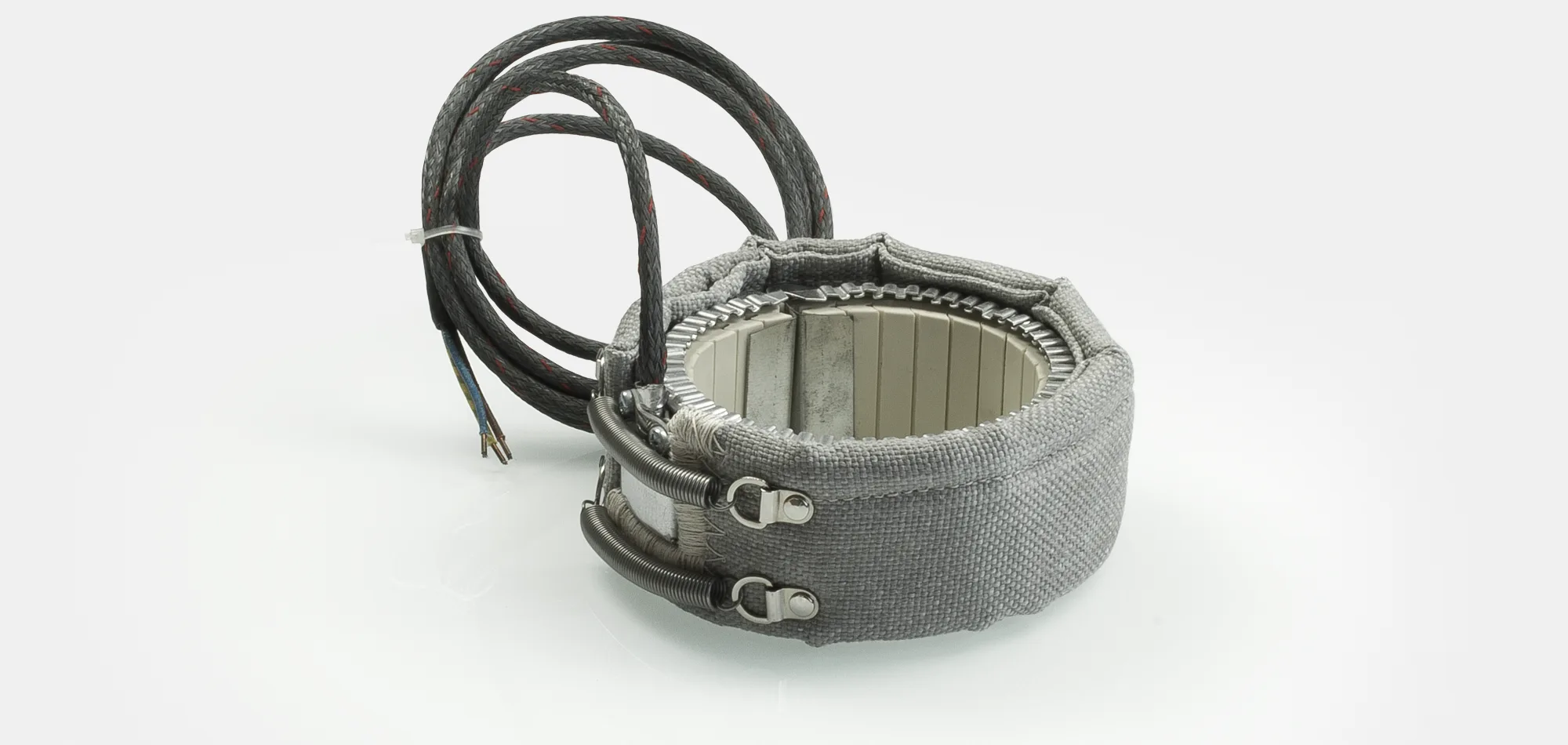
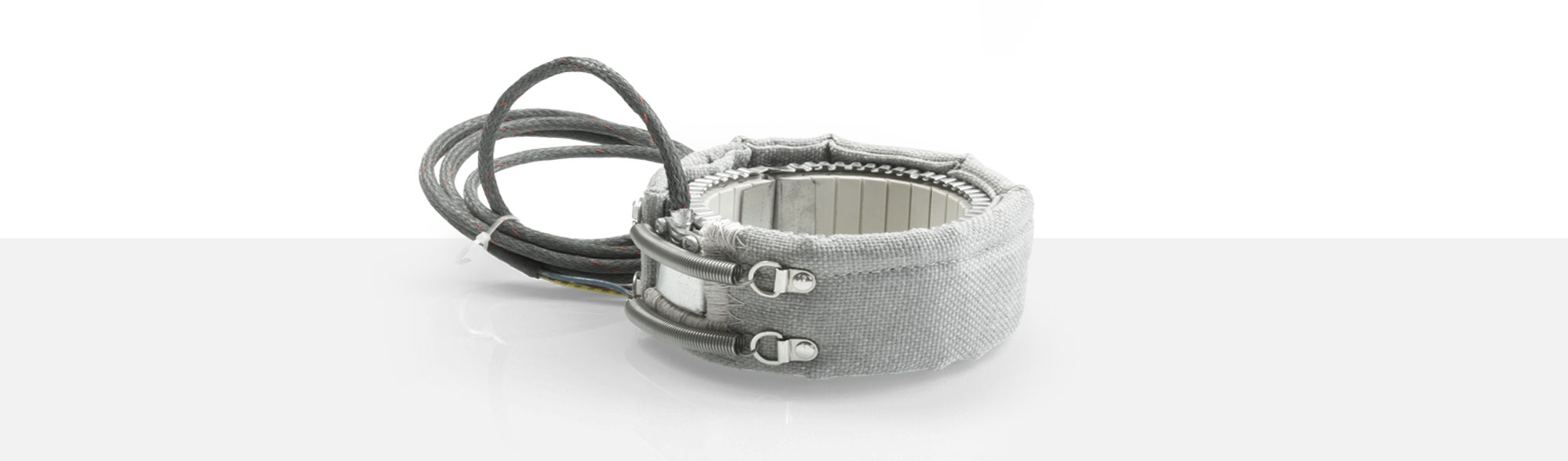
custom geometries holes and apertures cut-outs for sensors cut-outs for connections spring/ring fastening tensioning/strap fastening hook-and-loop fastening press studs hot-surface warning label identification marking special materials on request alternative thicknesses on request PTFE-coated aluminium-faced

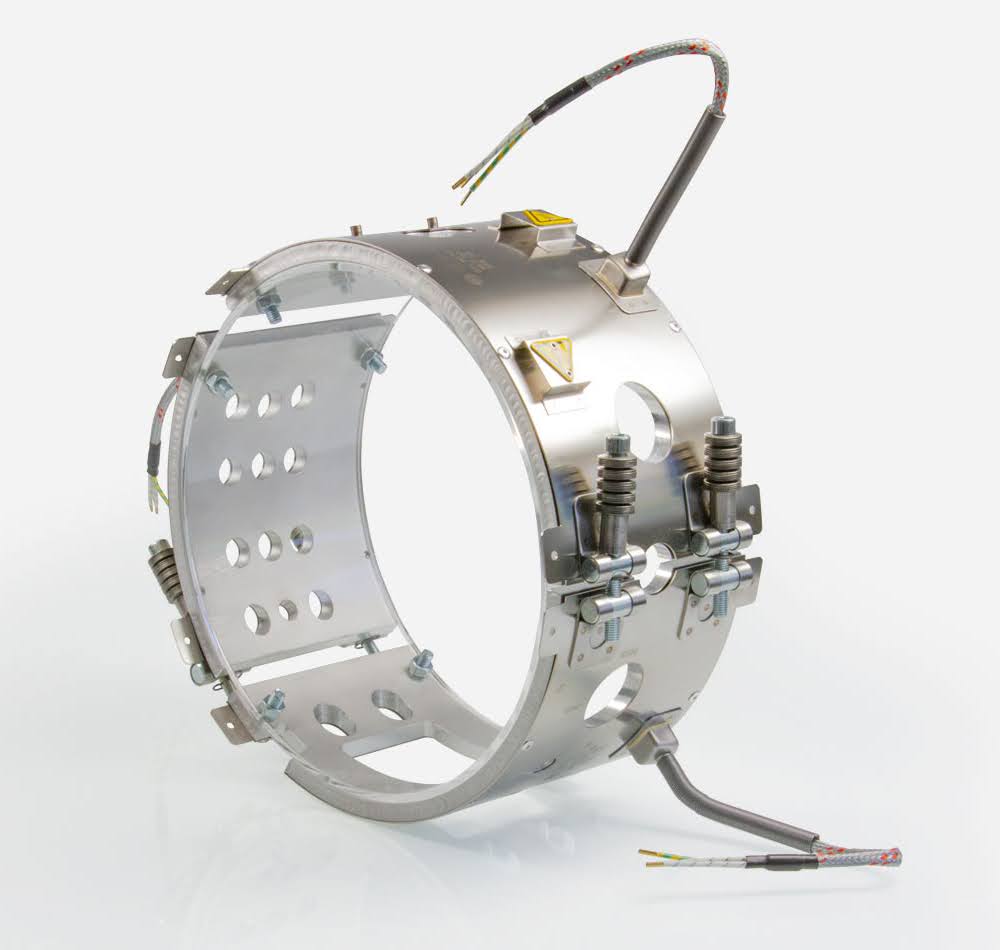
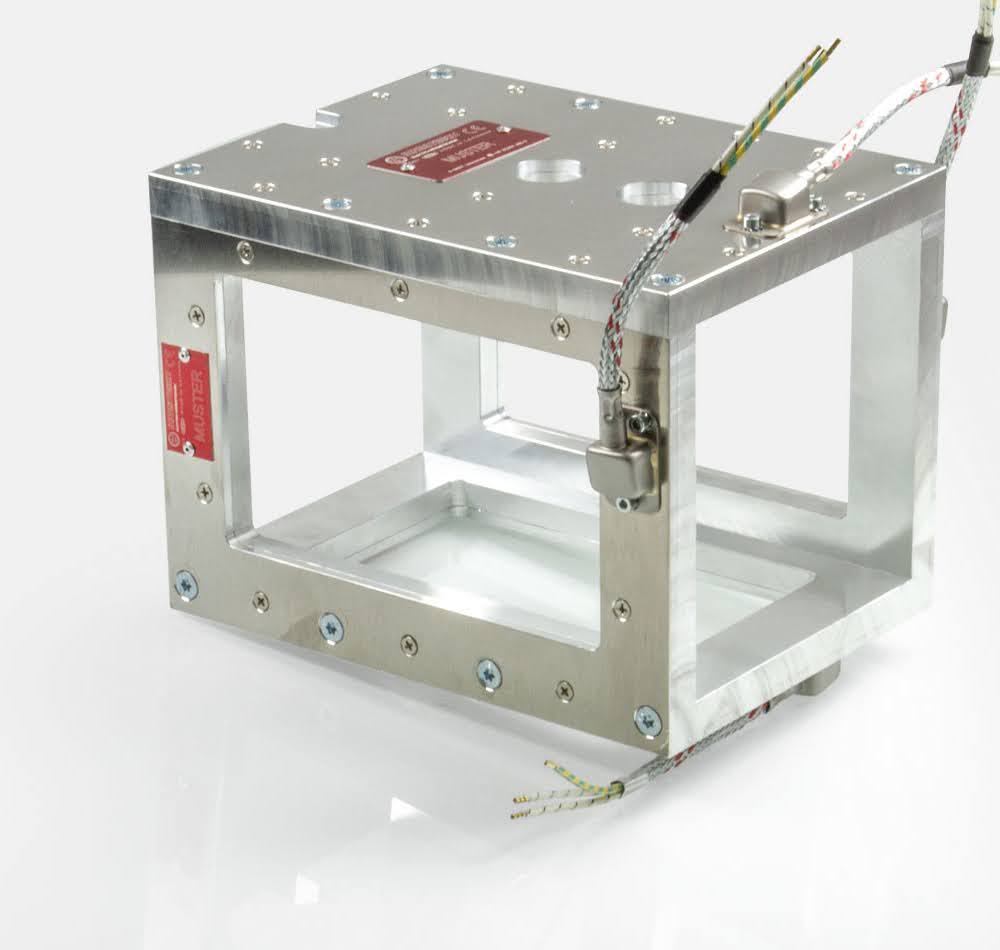
Application images and fastening options

Compact technical overview

FeatureSpecificationBenefits
Temperature rangeup to 500 °Cfor industrial heating zones and plastics processing
Standard thicknessapprox. 20 mmcompact insulation with service-friendly installation
Minimum sizefrom 30 mm width/lengthalso suitable for smaller heating zones and bespoke geometries
Outer coatingstandard fabric, PTFE-coated or aluminium-facedmatched to the environment, cleaning requirements and heat reflection
Fasteningsspring/ring, tensioning/strap, hook-and-loop or press studmatched to installation, maintenance and the existing system
Optionswarning label, custom identification, alternative materials and thicknesses on requesttechnical adaptation to the machine, operator standards and operating environment
Manufacturecustom-made to measurecut-outs, apertures and OEM versions available

The realistic range: 15 — 40 %

Industry figures range from 20% to 40% savings. Both can be correct because they refer to different starting conditions. Our data sheet states 20% as a conservative average that can also be achieved under unfavourable conditions. In certain situations, 40% is realistic; in others, 15% is the maximum.

Factor Lower saving Higher saving
Process temperature Low (below 200 °C) High (above 300 °C)
Ambient temperature Warm hall, little draught Cold hall, open doors
Band-heater surface Small, minimally exposed Large, freely exposed
Operating hours per year Single-shift operation Three-shift operation, 24/7
Electricity price Low (below 15 ct/kWh) High (above 25 ct/kWh)

We therefore do not use blanket figures. The calculator below estimates individual savings from your actual parameters: band-heater type, dimensions, operating days and electricity price.

What insulation can save you.

Select your band-heater type and enter its dimensions. The calculation updates immediately.

Diameter
mm
×
Width / length
mm
Surface area: 565 cm² · Output: 2.5 kW
7
240
20 ct
Total output 17.8 kW
Total surface area 3,958 cm²
Energy cost without insulation
€10,656
Energy cost with insulation
€7,459
Your annual saving
€3,197
Saving per day € 13
Payback period approx. 6 months
CO₂ per year ~ 3.8 t
Request a quotation for your machine →

Indicative values based on your entries (radiant loss approx. 37% of heater output, insulation saving approx. 30%, 16 hours of operation per day). Actual savings depend on the process and system; we will gladly calculate your specific scenario. CO₂ calculation uses 0.18 kg CO₂/kWh as an indicative Austrian electricity-mix value.

Downloads

Thermal insulation jackets

Technical data and sketch templates for engineering and design

2 documents
Thermal insulation jackets – technical data (DE)
Data sheetPDF
Sketch templates for thermal insulation jackets (DE)
TemplatePDF

Frequently asked questions

Ihne & Tesch thermal insulation jackets can significantly reduce energy consumption on heated barrels, tools and machine components. Savings of up to 40% are possible in suitable applications.

Actual savings depend on operating temperature, machine running time, barrel size, ambient temperature, air movement, the condition of the existing heaters and insulation quality. Retrofitted insulation can pay back particularly quickly on injection moulding machines, extruders and continuously heated systems.

Thermal insulation jackets are suitable for injection moulding machines, extruders, plastics presses, blown-film systems, tool heaters, barrels, adapters, nozzle areas and other heated components in plastics processing.

The jackets are custom-made from a drawing, sketch, photograph or machine dimensions. They can therefore accommodate different diameters, lengths, contours, cut-outs, connection positions and machine geometries. Typical applications include injection moulding, extrusion, blow moulding, tool temperature control and energy-intensive processes with continuously heated surfaces.

Injection moulding machines and extruders lose some of their generated heat from the barrel surface to the surroundings. Thermal insulation jackets reduce this loss and keep heat where it is needed: in the process.

Benefits can include lower energy consumption, more stable temperature control, less heat radiation, lower surface temperatures, an improved working environment and a reduced load on production-area cooling. These effects are particularly relevant at high temperatures and with long machine running times.

Depending on the application, Ihne & Tesch offers spring/ring fastenings, tensioning or strap fastenings and hook-and-loop fastenings.

The appropriate fastening depends on installation conditions, accessibility, temperature, machine geometry and removal frequency. If jackets are regularly removed for maintenance, cleaning or tool changes, the fastening should be robust and easy to operate.

Thermal insulation jackets are normally made with a technical fabric. PTFE-coated and aluminium-faced surfaces are available as options.

PTFE-coated surfaces can be useful where chemical resistance, easier cleaning or particular process conditions are required. Aluminium-faced surfaces also reflect heat and can benefit applications with increased radiant heat. Selection should always match the temperature, environment and mechanical load.

They are secured using the selected fastening or press studs fitted directly to a band heater or tool heater. Integrated press studs can be provided on Ihne & Tesch FAK and FMK tool heaters.

The jackets must remain secure during operation while remaining accessible for maintenance or replacement. The fastening is therefore designed for the machine, geometry and subsequent handling.

Yes. Thermal insulation jackets can often be retrofitted to existing injection moulding machines, extruders, presses or tool heaters. The areas to be insulated are measured and the jackets are manufactured individually.

Photographs, drawings, barrel dimensions, diameters, lengths, connection positions, temperature range and machine details are useful for an enquiry. The more accurately the installation is described, the better the jacket can be adapted.

A technical enquiry should include the machine type, area to be insulated, diameter, length, operating temperature, existing band or tool heaters, cut-outs, connection positions, preferred fastening, quantity and, where available, photographs or drawings.

For injection moulding machines and extruders, barrel zones, nozzle areas, adapters and interfering contours are also relevant. This information enables Ihne & Tesch to assess the most suitable technical design.

Besides reducing energy consumption, thermal insulation jackets often improve working conditions. They reduce heat radiation and hot surface areas and can lower the ambient temperature around the machine.

Improved insulation can also support temperature stability because less heat is released uncontrollably into the surroundings. This is particularly beneficial in injection moulding, extrusion and continuously heated tools.

insulation jackets enquiry

Custom-made · energy savings up to 40% · over 90 years of experience