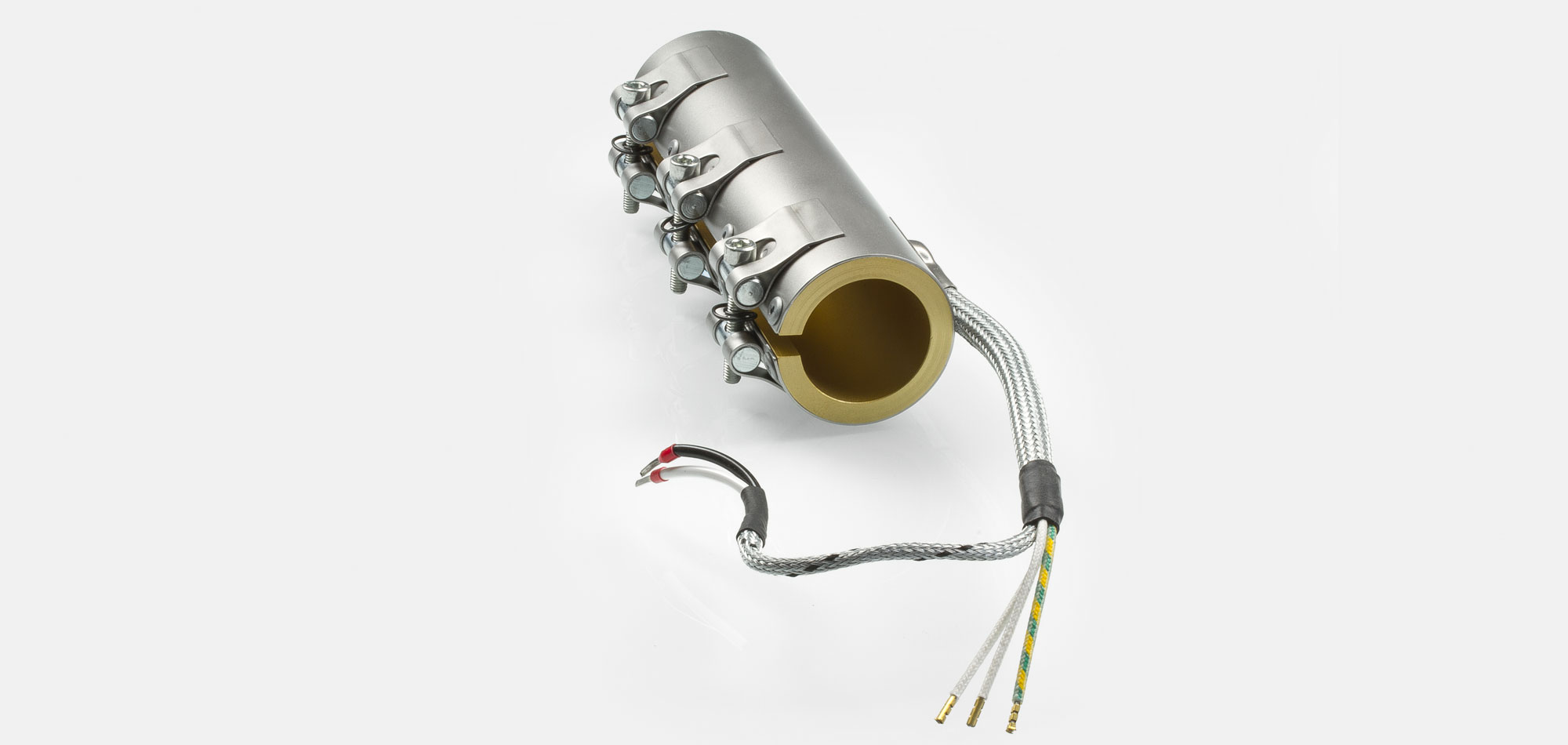
The problem is in the gap
A nozzle band heater can only transfer its nominal power cleanly if the contact surface with the injection moulding nozzle is correct. As soon as an air gap is created between the heating band and the nozzle cylinder, the heating power initially becomes a thermal resistance. The energy is present electrically, but it enters the process delayed and unevenly.
This is exactly where standard separates from precision. In the case of curved sheet metal heating strips, the inserted heating conductor is rounded on its insulator. The rounding process is typically done manually by gradually adjusting the rear rounding roller. This means that deviations in the final diameter are practically system-related. The gap between the clamping tabs cannot be exactly reproduced either because the tabs are never dotted with an absolutely identical distance.
DAK and DMK follow a different principle. The geometry is not approximated by gradual bending, but rather manufactured to the specific nozzle diameter. A CNC machine works with fixed parameters: material is removed by machining, holes and recesses are made in a defined manner, and internal contours are created in a reproducible manner. The contact surface is not an accessory, but rather the central physical prerequisite for stable heat transfer.
Air conducts heat around 7,700 times worse than aluminium. Even small gaps cost regularity, energy and process reliability.
Why DAK and DMK work differently
DAK and DMK are not curved sheet metal solutions. They are made in compact aluminium or brass construction and are tailored to the required inner diameter, length, holes and recesses on state-of-the-art CNC machining centers. This creates a heating band that mechanically fits the nozzle and works thermally with it.
The difference is fundamental in terms of manufacturing technology: During round bending, an elastically reacting composite of jacket, insulator and heating conductor is formed. Springback, roller position, tab position and operator influence have a direct effect on the later inside diameter. At DAK and DMK, the functionally relevant geometry is machined. This is reproducible, measurable and much more manageable for series machines.
aluminium distributes heat very quickly across the surface. This makes DAK particularly strong when energy efficiency, short response times and uniform nozzle temperatures are crucial. Brass is thermally more robust and allows higher operating temperatures. That's why DMK demonstrates its strengths in technical plastics, high power densities and demanding hot runner applications.
- Tolerance-related air gaps to the nozzle
- Final diameter depends on manual round roller adjustment
- Clamping tab gap not exactly the same due to dotted tabs
- Higher output level for the same nozzle temperature
- Local cold spots and hotspots possible
- Geometry limited by bending process
- Thermal stress due to uneven system
- Fits the specific nozzle diameter
- Fixed CNC parameters instead of manually approximated rounding
- Full-surface heat transfer without an avoidable air gap
- More homogeneous temperature over the nozzle length
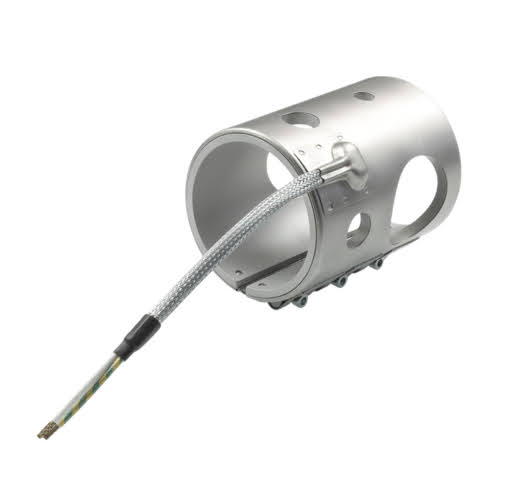
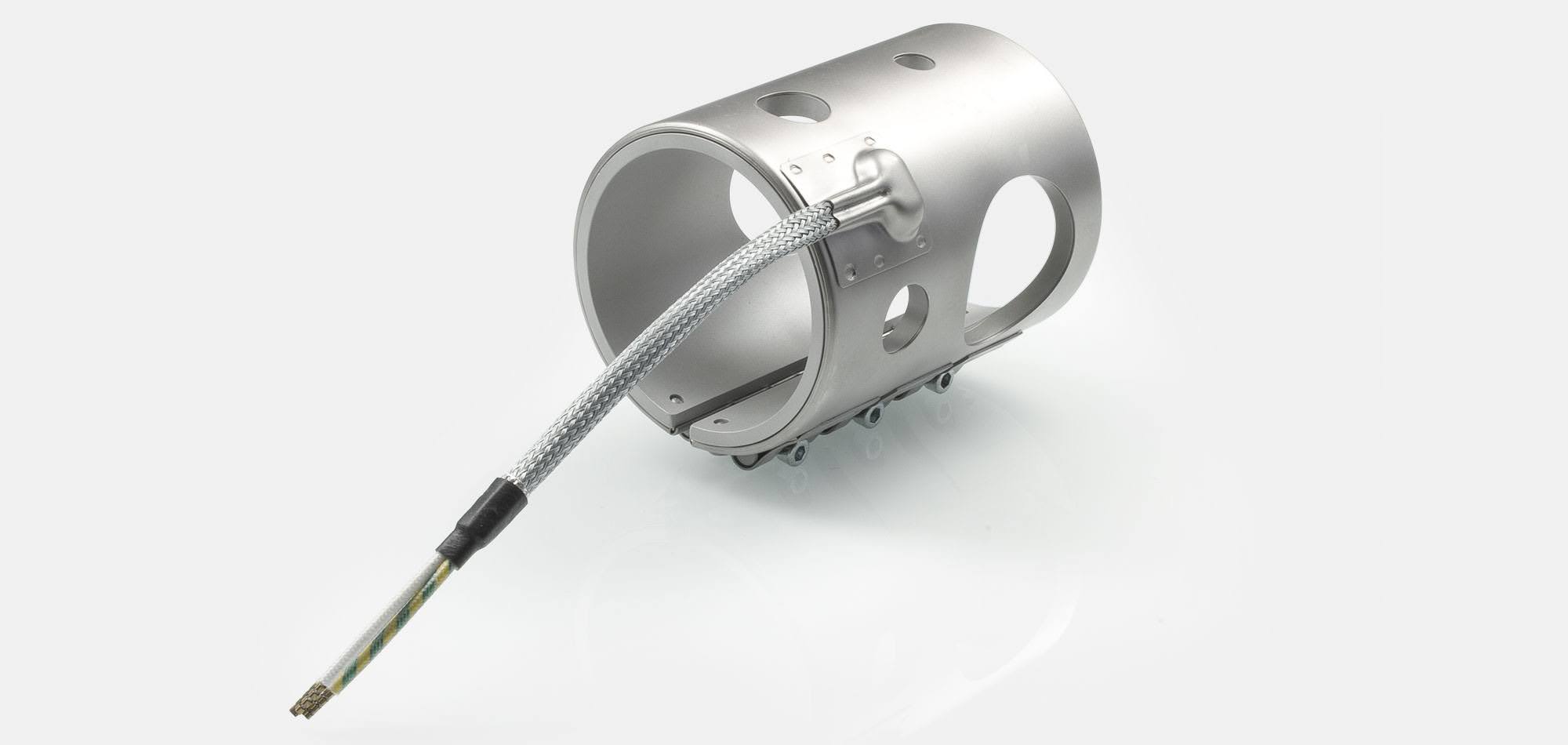
- Holes and recesses according to machine geometry
- Production on state-of-the-art CNC machining centers
What this does in injection moulding
Energy efficiency
A hot runner mould with many cavities does not run in a brochure, but in shift operation. If each heating band requires a higher output level due to poor system, the loss adds up across the number of nozzles, running time and machinery. With DAK and DMK, a larger proportion of the power input arrives directly at the nozzle cylinder.
Temperature precision
The melt reacts sensitively to local temperature errors. Areas that are too cold can cause viscosity fluctuations, incomplete filling or unstable shot weights. Areas that are too warm accelerate material degradation, discoloration and deposits. A homogeneous contact surface reduces these extremes.
service life
Thermal stress arises when neighboring component areas become differently warm and expand differently. A band heater with a stable system and even heat distribution puts less strain on itself and the nozzle. This is not a comfort feature, but rather a longevity factor.
DAK and DMK in technical comparison
| feature | DAK | DMK |
|---|---|---|
| material | Compact aluminium design with stainless steel jacket | Compact brass design with stainless steel jacket |
| Max. temperature | Up to 450°C | Up to 550°C |
| Power density | Up to 7.5 W/cm² | Up to 10.0 W/cm² |
| diameter | From approx. 18 mm | From approx. 30 mm |
| Sensors | Type L, J or K can be integrated | Type L, J, K or Pt100 can be integrated |
| production | State-of-the-art CNC machining centers, drilling and recesses according to machine specifications | |
When DAK, when DMK?
DAK is the right choice if energy efficiency, fast heat distribution and stable nozzle temperatures up to 450 °C are important. Typical are high-tech tools, series processes and applications in which every percentage point less output is noticeable over the runtime.
DMK is the right choice for higher temperatures up to 550 °C, demanding technical plastics and situations in which service life and thermal stability are more important than the mere purchase. The brass body provides reserves for processes where standard versions reach their limits.
- 24/7 hot runner operation: Design DAK or DMK according to temperature window and power density.
- Technical plastics: Check DMK for high temperature requirements and strong thermal load.
- Tight installation spaces: Coordinate the closure, connection outlet, holes and recesses directly with the machine geometry.
- Control quality: Place integrated sensors where the real nozzle temperature is crucial to the process.
Why this creates market position
The Ihne & Tesch Group is not the undisputed market leader at DAK and DMK because a data sheet sounds better. The decisive factor is the combination of material, vertical integration, application experience and thermal understanding. A heating band is not an isolated spare part in injection moulding technology. It is part of the process.
Anyone who only evaluates nozzle band heaters based on diameter, length and wattage is overlooking the most important point: the real heat transfer in the machine. DAK and DMK start right there. No more metal around the nozzle, but better thermal coupling to the nozzle.
DAK or DMK for your nozzle?
Send nozzle diameter, length, voltage, power, maximum temperature, plastic and installation situation. We check the appropriate version technically.